
What our 36 month auto repair warranty covers
What the Repair Order guarantees, and what cancels it.
Qualifying repairs at our Campbell shop carry a limited warranty for 36 months or 36,000 miles, whichever comes first. Brake friction material is the one exception, and it carries 24 months or 24,000 miles on parts and labor. This article explains what that covers in plain terms, what it does not pay for, and the things that void it. The full policy is on our limited warranty page. Anything different for your visit is written on your Repair Order.
What does the 36 month warranty actually cover?
It covers the work on one Repair Order: the parts we installed and the labor we performed on that visit. It does not cover the rest of the car.
Say a part we installed fails. Or the vehicle works incorrectly because of a part we installed or labor we performed. In that case we repair or replace the part, or rework the labor, at no additional charge. You bring the vehicle back to our shop in Campbell so we can do that. The warranty applies to the original purchaser of the service. It covers only the work and parts listed on that Repair Order. No other warranty is implied or expressed beyond it.
There's a second, separate warranty worth knowing about. We also offer a 24 month or 24,000 mile Nation Wide Warranty for some repairs. It's separate, and it does not change or shorten the 36 month term. Your Repair Order shows which warranty applies to the work you had done. Ask us to point it out before you leave.
Why do brakes have a shorter term?
Brake friction material is excluded from the 36 month term and carries 24 months or 24,000 miles on parts and labor instead.
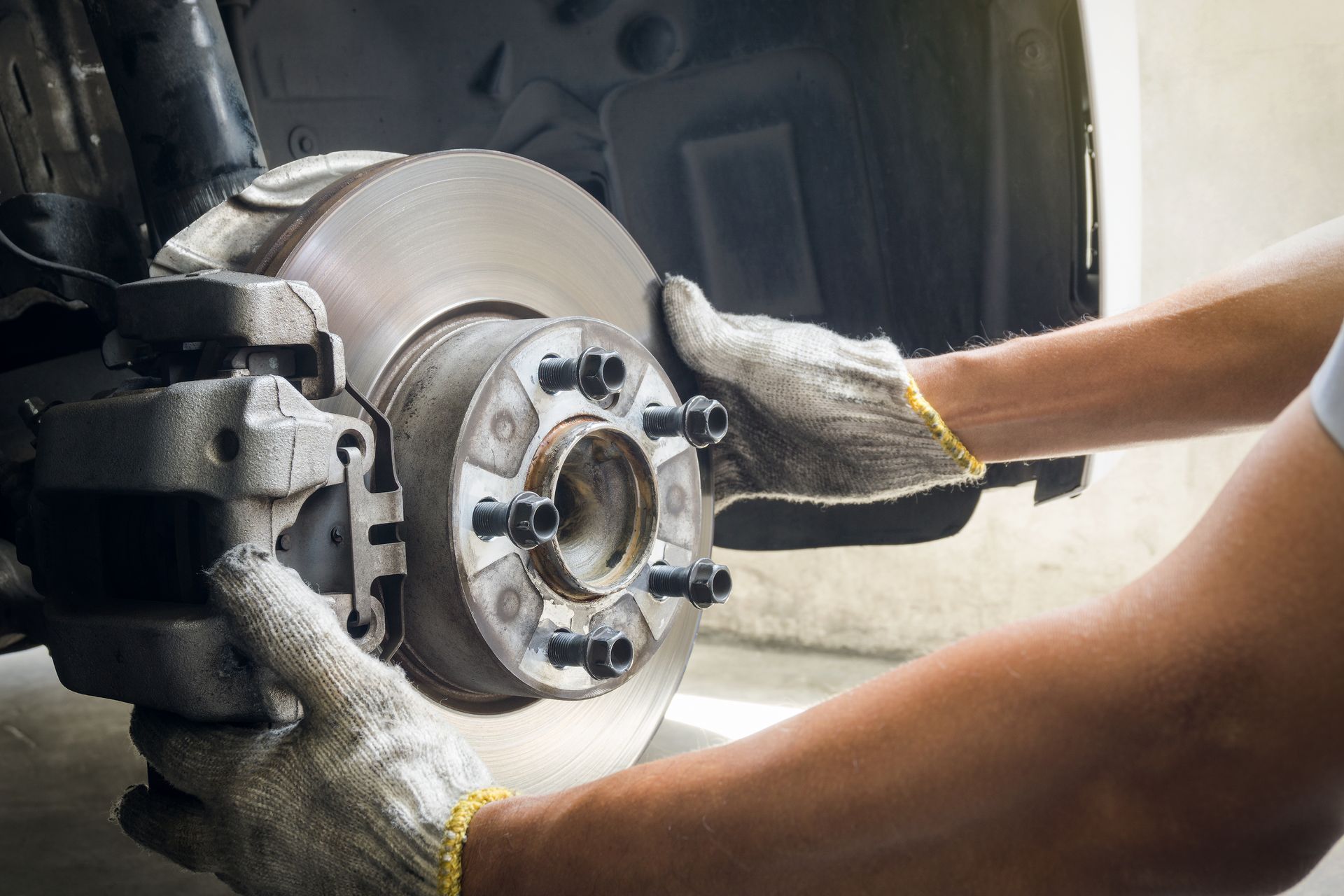
The reason is what friction material does. It's the surface designed to wear away while it slows the car down. So it's treated as a wear item, not as a permanent repair. Everything else on a brake job is a different matter. When we do brake service and diagnostics, the inspection looks at the pads, the rotors, the calipers, and the fluid. The work itself can include a brake flush, new pads, new rotors, or caliper work. A high squeal or a low grinding sound when you brake is worth an inspection rather than a guess.
What voids the warranty?
The policy lists the conditions that void it, and most of them come down to what happens to the car after the repair. The warranty is voided by:
- Overheating
- Lack of lubrication
- Off road use by a vehicle that isn't built for it
- Misuse, negligence, or abuse
- Failure to perform normal or required maintenance
- Modification of the completed work
- Removal of any recording device installed for monitoring purposes
Damage to any component from contaminated fuel or contaminated lubricants isn't covered either.
Two of those are worth a closer look. They're the ones drivers run into without meaning to.
The first is skipped maintenance. That's why it pays to keep up with your factory scheduled maintenance at 30,000, 60,000, and 90,000 miles. That service is typically the automaker's specified fluids, filters, and belts. A repair that fails because the maintenance behind it was skipped isn't a defect in our work.
The second is where the repair goes next. Warranty repairs have to come back to us and be performed by us. We aren't liable for any cost or charge at another facility without our express prior consent. So call us before anyone else starts work. That holds if you're out of town, and it holds if another shop tells you something we repaired has failed. Prior consent has to be prior.
What doesn't the warranty pay for?
The warranty covers the repair itself, not the knock-on costs of a breakdown. It does not cover:
- Towing or storage
- Damage for loss of use of the vehicle
- Loss of time, loss of profit, or loss of income
- Future maintenance or servicing costs, unless we put that in writing on the Repair Order
- Any repair or replacement that's already covered by a manufacturer warranty, or by another warranty in effect when the failure happens
That last one matters if your car is newer. If the failed part is still under the automaker's warranty, that warranty is the one that applies. Sending you to the dealer for it is the right answer, not a brush off.
What are your rights under California law?
The warranty is governed by California law, and the law adds protections on top of the term itself. A buyer in California has the right to have the product serviced or repaired during the warranty period. Beyond that:
- The warranty is extended by the number of whole days the vehicle is out of your hands for warranty repairs. Time in our shop doesn't eat your coverage.
- If a defect exists within the warranty period, the warranty does not expire until that defect has been fixed.
- The period is also extended if warranty repairs were delayed by circumstances beyond your control.
- It's extended again if the warranty repairs did not remedy the defect. For that, you have to tell us the repairs failed within 60 days of their completion. That 60 day window is worth remembering.
- If the defect still isn't fixed after a reasonable number of attempts, you may return the product. That means a replacement or a refund, in either case less a reasonable charge for usage.
None of that replaces your other legal protections. The policy says plainly that this extension does not affect the protections or remedies you have under other laws.
The terms live in two places. The limited warranty policy and terms page carries the full text. Your Repair Order carries anything specific to your visit, including a term stated otherwise in writing. For another piece written for drivers weighing up what their car needs, see timing belt or timing chain.
Autotrend Auto Repair, 2885 S Winchester Blvd, Suite F, Campbell, CA 95008, serving Campbell, West San Jose, Los Gatos, Saratoga, Cupertino and Cambrian Park.
Book online at autotrendautorepair.com.